Our Story
The history of our brand can be traced back to a number of British telegraph companies founded by Sir John Pender in the 1860s. Today, the focus of our business is in the Caribbean. We’ve operated in the region since the 1870s, always at the forefront of innovating infrastructure and services – from historic telegraph poles and cables, to modern day superfast broadband, mobile and TV services.
In more recent years, we’ve undergone lots of changes to set us up for success – like our acquisition of Columbus in 2015, our joining the Liberty Global group in 2016, and our split off as part of the Liberty Latin America family in 2017.
Check out the timeline below for more detail on the rich tapestry of our heritage.
-
2023
Liberty Networks
In Q3 2022, C&W Business and C&W Networks separated from C&W Communications, establishing a separate operating and reportable segment with Liberty Latin America (LLA). On May 15, 2023, the subsidiary of LLA rebranded to Liberty Networks. To learn more about Liberty Networks, visit https://libertynet.com/
-
2020
Acquisition of IT Outsource Ltd.
On July 1st, we acquired IT Outsource Ltd. (“ITO”), a leading Managed Service Provider (MSP) in the Cayman Islands. Founded in 2004, IT Outsource provides IT managed and support services, cloud back-up, security services and enterprise hardware and software solutions focused on clients in the financial services, insurance, government and tourism sectors. ITO prides itself on simplifying the IT requirements of its clients with a reputation for outstanding customer service.
-
2019
Sale of Cable & Wireless Seychelles
On November 5, 2019, Liberty Latin America Ltd. announced it has sold its subsidiary Cable & Wireless Seychelles, to a consortium of local investors. In the transaction, Cable & Wireless Seychelles is valued at an enterprise value of $104 million on a cash- and debt-free basis. The net proceeds from the sale are expected to be used for general corporate purposes.
-
2017
Cable & Wireless Charitable Foundation
On September 20, 2017, Cable & Wireless Communications (C&W) established the Cable & Wireless Charitable Foundation with seed funding of US$500,000 in response to the humanitarian crisis in the aftermath of recent hurricanes. The Foundation will initially serve as a fundraising hub, disbursing monies raised to recognized local, regional and international charitable agencies to execute relief and recovery projects in affected territories.
-
2016
Liberty Global
On May 2016 Liberty Global acquired C&W Communications (CWC) and now the Company is part of the Liberty Global (LiLAC) Group. Liberty Global is the world’s largest international cable television company and offers a wide range of advanced services with increased operational, financial, and geographic scale that enables continued investment across the region and ICT sector.
-
2015
Columbus
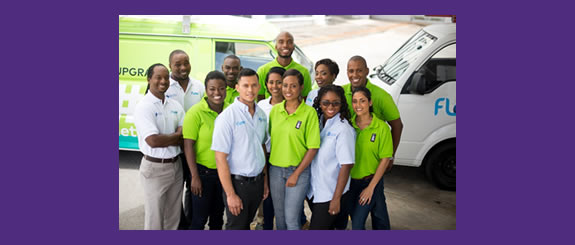
CWC and Columbus announce official merger and have now become one world-class quad play telecoms provider for the Latin American and Caribbean market. CWC shareholders voted overwhelmingly in favour of the Acquisition and the company also obtained regulatory consent in a number of key markets, including the necessary approvals for the Acquisition in Jamaica. Completion of the Acquisition took place on March 31 2015.
-
2014

Merger
Cable & Wireless Communications Acquires Columbus International Inc. Cable & Wireless Communications (CWC) announced on November 6 that it has agreed terms to purchase 100 per cent. of the equity of Columbus International Inc.
-
2013
Focus
We completed the sale of our Macau and Islands businesses as part of a strategy to focus our business in the Caribbean and Latin America.
-
2011
Expansion
We bought 51% of shares in The Bahamas Telecommunications Company and assumed management control.
-
2010
Demerger
Cable and Wireless plc demerged and Cable & Wireless Communications became an independently listed company. Our former sister company, Cable & Wireless Worldwide, was subsequently bought by Vodafone Group on 27 July 2012.
-
2007
Cricket
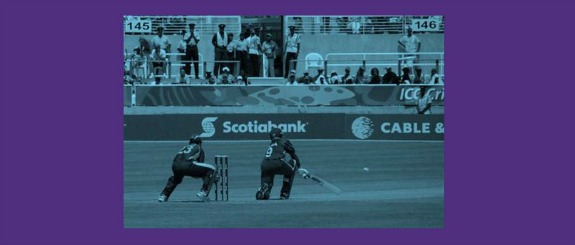
Cable & Wireless sponsored the ICC Cricket World Cup in the Caribbean.
-
2000
Competition
Jamaica was the first Caribbean country to agree to liberalise its telecoms market, passing a law in February 2000. During the decade, we worked with governments across the region to introduce competition. We remain the leading provider in most of the markets in which we operate and most of the services we provide.
-
1999
Cable & Wireless Panama
Cable & Wireless bought a 49% share of the Panamanian Instituto Nacional de Telecomunicaciones (INTEL). The company is now called Cable & Wireless Panama.
-
1995
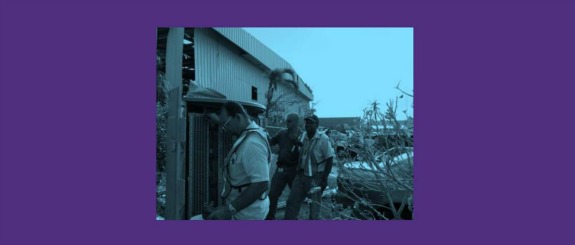
Internet
Cable & Wireless introduced internet access to the Cayman Islands.
-
1981
Privatisation
Cable & Wireless was the first privatisation of the Thatcher Government. In a challenge to British Telecommunications, Cable & Wireless launched Mercury Communications as part of the privatisation.
-
1972
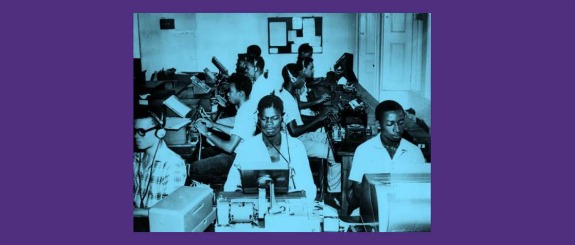
Training
The Cable & Wireless Telecommunications College was opened in Barbados as part of a £4 million investment in the country. It was one of four in the group at the time with the others located at Porthcurno in Cornwall, Bahrain and Hong Kong.
-
1971
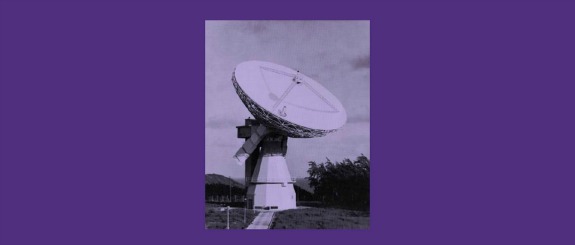
TV
Jamaica, Trinidad and Barbados were able to transmit and receive high grade television, telephony, high-speed data and faxes using satellite earth stations completed in 1971 and 1972. By 1988 further earth stations had been completed in Bermuda, Belize, the Cayman Islands and Turks & Caicos.
-
1966
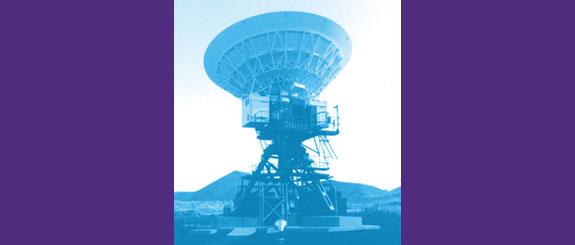
Space
Cable & Wireless built their first earth station on Ascension Island to provide support to for the Apollo moon landings
-
1965
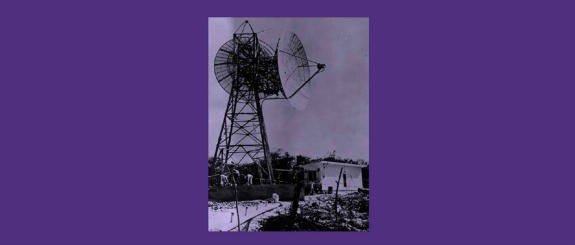
Satellite
Cable & Wireless had representation on the technical committee for Intelsat 1 (nicknamed Early Bird), the world’s first commercial communications satellite to be placed in continuous orbit.
-
1958
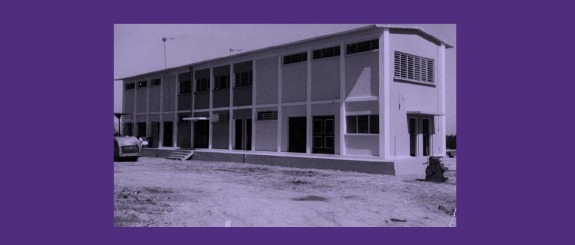
Belize
Cable & Wireless was invited to help the Government improve its telecommunications services to cope with traffic generated by the press coverage of the Royal visit of HRH Princess Margaret. This included the provision of the first radio-telephone link connecting Belize with the rest of the world.
-
1947
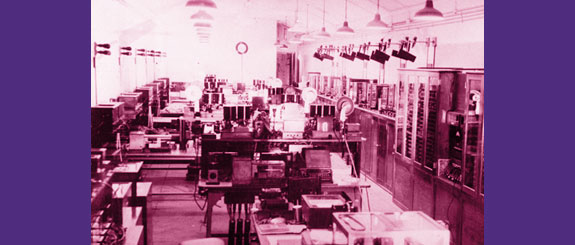
Nationalisation
The Government of Clement Atlee nationalised Cable & Wireless, which became the international communications section of the British Post Office.
-
1938

West Indies
The West India and Panama Telegraph Company changed its name to Cable and Wireless (West Indies) Ltd.
-
1934
International Communications
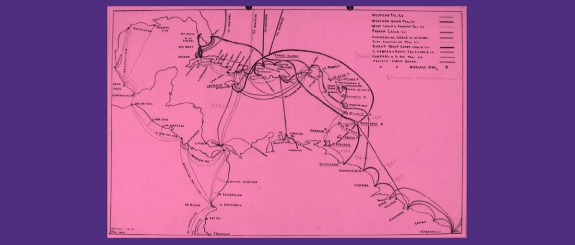
Cable & Wireless purchased the West Indies Cable Network, a sub-sea cable network comprising 20 subsea cables, each over 700 miles in length, submerged in water 1,000-2,000 fathoms deep. The network provided the Caribbean and Panama with international communications via telegraph.
-
1934
Cable & Wireless
Imperial and International Communications was renamed Cable & Wireless.
-
1929
Merger
The Eastern Telegraph Company merged with Marconi’s Wireless Company to form Imperial and International Communications.
-
1924
Marconi
Marconi succeeded in telephoning Australia on short wave radio after experiments between Poldhu and his yacht. In July he was granted a contract with the General Post Office to set up shortwave telegraphy circuits from London to Australia, India, South Africa and Canada.
-
1914-1918
WWI
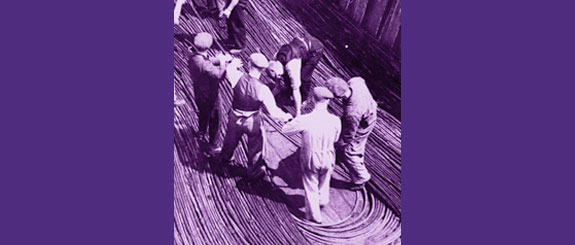
Wireless and cable telegraphy were important tools of communication in the First World War. The Eastern Telegraph Company and Marconi supported the war effort through the War Office and the Admiralty by offering expertise in keeping communication open around the world, through censorship, listening in, field work and in confusing the enemy. Also, a once US/ German cable was re-routed to Cornwall, which helped isolate Germany and her communication system.
-
1901
Wireless
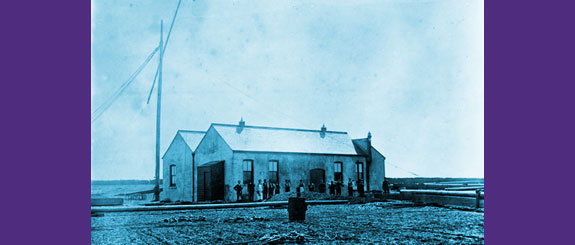
After many experiments in wireless communication, Marconi set up Poldhu and the Lizard stations in Cornwall. He successfully transmitted the first transatlantic wireless signal from Cornwall to Newfoundland.
-
1900
Network
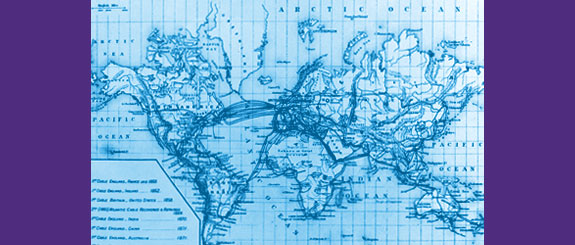
The Eastern Telegraph Company had a massive international communication network of around 150,000km of undersea cables.
-
1883
Fixed line
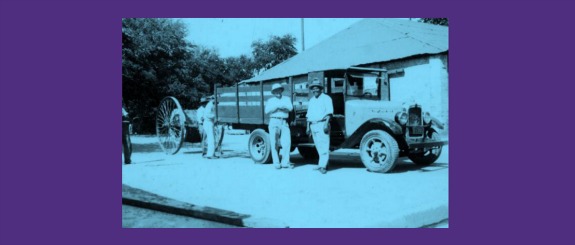
The West India and Columbia Electric Company, a predecessor of LIME Jamaica, installed the first 50 telephone lines in the country’s capital city, Kingston.
-
1877
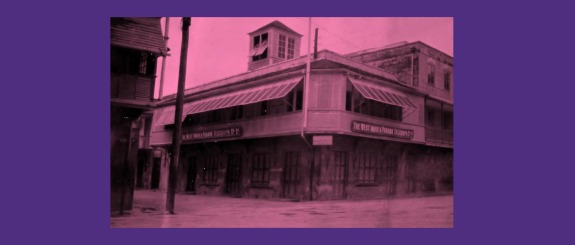
WI and Panama
The West Indies and Panama Telegraph company was founded in 1870 to lay sub-sea cables in the region, but went into liquidation seven years later. A new company was created with the same name and with John Pender as one of its directors.
-
1872
Largest
All of Pender's companies merged to form The Eastern Telegraph Company, the first global cable telecommunications company and the largest operating company in the world at that time.
-
1870
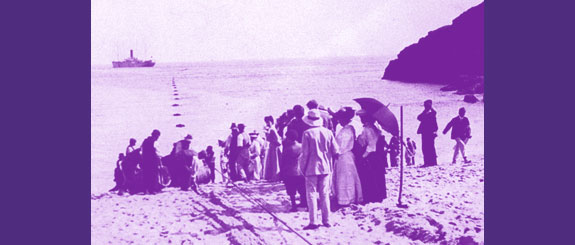
Porthcurno
The first sub-sea cable landed at Porthcurno, Cornwall, completing the London to Bombay telegraph line. In total 14 sub-sea cables operated from Porthcurno, making this an important station.
-
1852
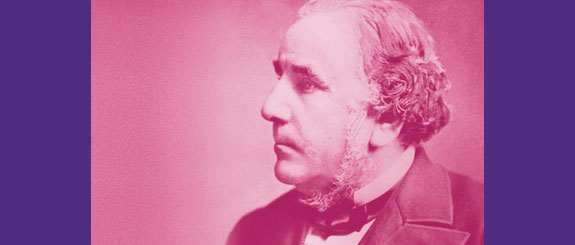
Pender
John Pender, a Manchester cotton merchant, joined other businessmen as director of the English and Irish Magnetic Telegraph Company. This company ran a telegraph cable service between London and Dublin. This was only two years after the first submarine cable between England and France had been laid. This was the beginning of Pender’s submarine cable empire and Cable & Wireless.